Find What You Love. Save While You Shop.
This book focuses on three emerging research topics in mobile social networks (MSNs): privacy-preserving profile matching (PPM) protocols, privacy-preserving cooperative data forwarding (PDF) protocols, and trustworthy service evaluation (TSE) systems. The PPM helps two users compare their personal profiles without disclosing the profiles. The PDF helps users forward data to their friends via multiple cooperative relay peers while preserving their identity and location privacy. The TSE enables users to locally share service reviews on the vendors such that users receive more valuable information about the services not only from vendors but also from their trusted social friends. The authors address both theoretic and practical aspects of these topics by introducing the system model, reviewing the related works, and presenting the solutions. Security and Privacy for Mobile Social Networks further provides the security analysis and the performance evaluation based on real-trace simulations. It also summarizes the future research directions for this rapidly growing area of research. The book will be valuable for researchers and practitioners who work with mobile social networks, communication platforms, wireless communication techniques, and internet applications.”Suitable for any type of reader as an introduction to the topic… The chapters are well motivated and presented… It is recommended for researchers.” -ACM Computing Reviews, 21 July 2014
Advances in information and communication technologies continue to p- vide new means of conducting remote transactions. Services facilitated by these technologies are spreading increasingly into our commercial and private spheres. For many people, these services have changed the way they work, communicate, shop, arrange travel, etc. Remote transactions, however, may also open possibilities for fraud and other types of misuse. Hence, the requi- ment to authorize transactions may arise. Authorization may in turn call for some kind of user authentication. When users have to provide personal inf- mation to access services, they literally leave a part of their life on record. As the number of sites where such records are left increases, so does the d- ger of misuse. So-called identity theft has become a pervasive problem, and a general feeling of unease and lack of trust may dissuade people from using the services on o?er. This,inanutshell,isoneofthemajorchallengesinsecurityengineering- day. How to provide servicesto individuals securelywithout making undue – cursions into their privacy at the same time. Decisions on the limits of privacy intrusions – or privacy protection, for that matter – are ultimately political decisions. Research can de?ne the design space in which service providers and regulators may try to ?nd acceptable tradeo?s between security and privacy.
The Workshop on the Economics of Information Security was established in 2002 to bring together computer scientists and economists to understand and improve the poor state of information security practice. WEIS was
borne out of a realization that security often fails for non-technical reasons. Rather, the incentives of both – fender and attacker must be considered. Earlier workshops have answered questions ranging from?nding optimal
levels of security investement to understanding why privacy has been eroded. In the process, WEIS has attracted participation from the diverse?elds such as law, management and psychology. WEIS has now established itself as the
leading forum for interdisciplinary scholarship on information security. The eigth installment of the conference returned to the United Kingdom, hosted byUniversityCollegeLondononJune24-25,2009.Approximately100researchers,
practitioners and government of?cials from across the globe convened in London to hear presentations from authors of 21 peer-reviewed papers, in addition to a panel and keynote lectures from Hal Varian (Google), Bruce Schneier
(BT Co- terpane), Martin Sadler (HP Labs), and Robert Coles (Merrill Lynch). Angela Sasse and David Pym chaired the conference, while Christos Ioannidis and Tyler Moore chaired the program committee.
This book constitutes the thoroughly refereed selected papers on the 4th Cyber Security and Privacy Innovation Forum, CSP Forum 2015, held in Brussels, Belgium, in April 2015.The 12 revised full papers presented were carefully reviewed and selected from various submissions. The papers are organized in topical sections such as security and privacy in the cloud; security and privacy technologies; risk and trust; research and innovation in cyber security and privacy.
This book constitutes the refereed proceedings of the 6th International Conference on Security, Privacy, and Applied Cryptography Engineering, SPACE 2016, held in Hyderabad, India, in December 2016.
This annual event is devoted to various aspects of security, privacy, applied cryptography, and cryptographic engineering. This is indeed a very challenging field, requiring the expertise from diverse domains, ranging from mathematics to solid-state circuit design.
Social network usage has increased exponentially in recent years. Platforms like Facebook, Twitter, Google+, LinkedIn and Instagram, not only facilitate sharing of personal data but also connect people professionally. However, development of these platforms with more enhanced features like HTML5, CSS, XHTML and Java Script expose these sites to various vulnerabilities that may be the root cause of various threats. Therefore, social networking sites have become an attack surface for various cyber-attacks such as XSS attack and SQL Injection. Numerous defensive techniques have been proposed, yet with technology up-gradation current scenarios demand for more efficient and robust solutions. Cross-Site Scripting Attacks: Classification, Attack, and Countermeasuresis a comprehensive source which provides an overview of web-based vulnerabilities and explores XSS attack in detail. This book provides a detailed overview of the XSS attack; its classification, recent incidences on various web applications, and impacts of the XSS attack on the target victim. This book addresses the main contributions of various researchers in XSS domain. It provides in-depth analysis of these methods along with their comparative study. The main focus is a novel framework which is based on Clustering and Context based sanitization approach to protect against XSS attack on social network. The implementation details conclude that it is an effective technique to thwart XSS attack. The open challenges and future research direction discussed in this book will help further to the academic researchers and industry specific persons in the domain of security.
This book constitutes the refereed proceedings of the 29th Annual IFIP WG 11.3 International Working Conference on Data and Applications Security and Privacy, DBSec 2015, held in Fairfax, VA, USA, in July 2015. The 18 revised full papers and 6 short papers presented were carefully reviewed and selected from 45 submissions. The papers are organized in the following topical sections: data anonymization and computation; access control and authorization; user privacy; authentication and information integration; privacy and trust; access control and usage policies; network and internet security; and information flow and inference.
This book is an attempt to educate people on software security with my 10 years experience in security industry. This book is based on various security aspects that I came across while working passionately in software security industry. It has came from research and huge amount of reading on security trends. I have been writing blogs on this topic and this book is based on content from blogs and other references.Inspiration for this book is driven by people around me who use internet and are unaware of long term implications if used incorrectly. Topics covered1. Device protection to secure yourself – Password management, Security Softwares, Browsers, Plugins, Tools & Operating system security, 2. Online Privacy and Security – Facebook privacy settings, ISPs & website tracking, Android permissions, Anonymity, secure & private email, 3. Wi-Fi protection – OpenDNS for online security, Wi-Fi router settings, Parental protection using Wi-Fi router
Security, privacy, and trust in the Internet of Things (IoT) and CPS (Cyber-Physical Systems) are different from conventional security as concerns revolve around the collection and aggregation of data or transmission of data over the network. Analysis of cyber-attack vectors and the provision of appropriate mitigation techniques are essential research areas for these systems. Adoption of best practices and maintaining a balance between ease of use and security are, again, crucial for the effective performance of these systems.Recent Advances in Security, Privacy and Trust for Internet of Things (IoT) and Cyber-Physical Systems (CPS) discusses and presents techniques and methodologies, as well as a wide range of examples and illustrations, to effectively show the principles, algorithms, challenges, and applications of security, privacy, and trust for IoT and CPS.Book features:Introduces new directions for research, development, and engineering security, privacy, and trust of IoT and CPSIntroduces new directions for research, development, and engineering security, privacy, and trust of IoT and CPSIncludes a wealth of examples and illustrations to effectively demonstrate the principles, algorithms, challenges, and applicationsIncludes a wealth of examples and illustrations to effectively demonstrate the principles, algorithms, challenges, and applicationsCovers most of the important security aspects and current trends not present in other reference booksCovers most of the important security aspects and current trends not present in other reference booksThis book will also serve as an excellent reference in security, privacy, and trust of IoT and CPS for professionals in this fast-evolving and critical field. The chapters present high-quality contributions from researchers, academics, and practitioners from various national and international organizations and universities.

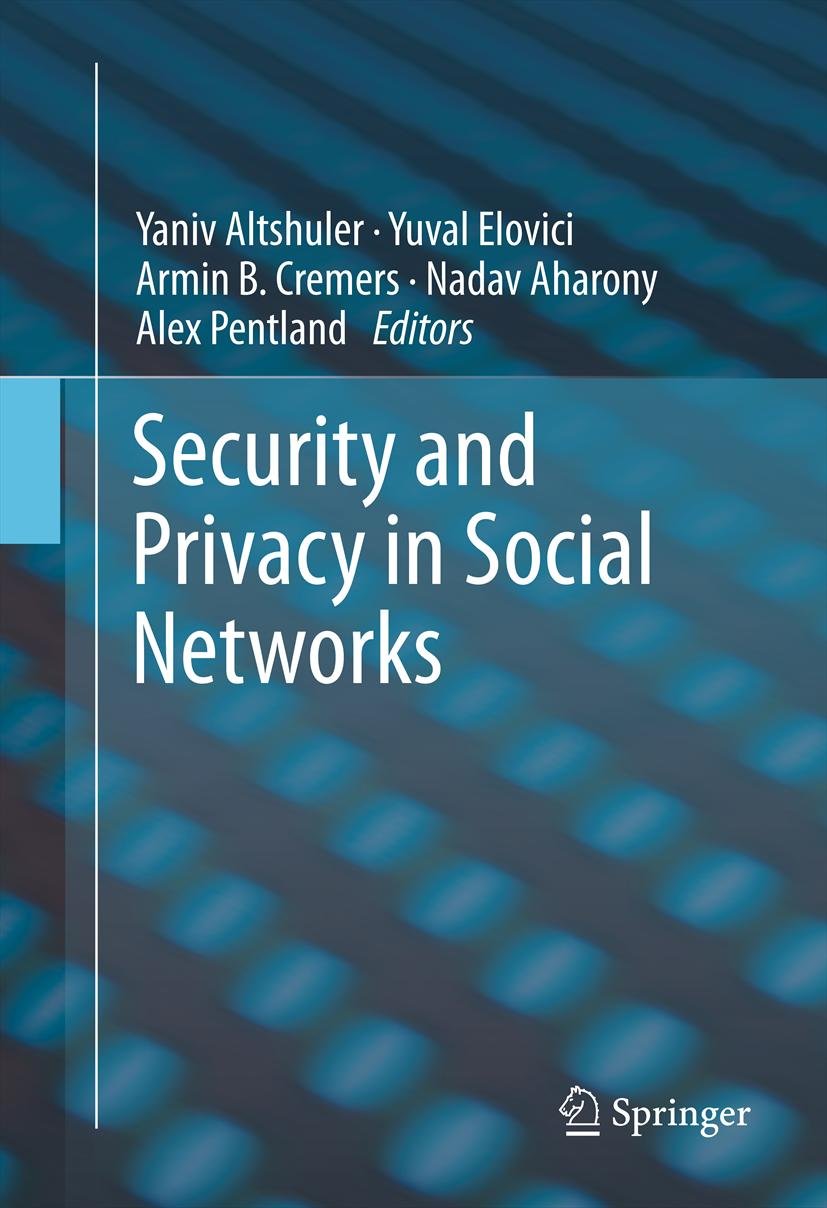
Security and Privacy in Social Networks brings to the forefront innovative approaches for analyzing and enhancing the security and privacy dimensions in online social networks, and is the first comprehensive attempt dedicated entirely to this field. In order to facilitate the transition of such methods from theory to mechanisms designed and deployed in existing online social networking services, the book aspires to create a common language between the researchers and practitioners of this new area- spanning from the theory of computational social sciences to conventional security and network engineering.
This important text/reference presents the latest secure and privacy-compliant techniques in automatic human recognition. Featuring viewpoints from an international selection of experts in the field, the comprehensive coverage spans both theory and practical implementations, taking into consideration all ethical and legal issues. Topics and features: presents a unique focus on novel approaches and new architectures for unimodal and multimodal template protection; examines signal processing techniques in the encrypted domain, security and privacy leakage assessment, and aspects of standardization; describes real-world applications, from face and fingerprint-based user recognition, to biometrics-based electronic documents, and biometric systems employing smart cards; reviews the ethical implications of the ubiquity of biometrics in everyday life, and its impact on human dignity; provides guidance on best practices for the processing of biometric data within a legal framework.
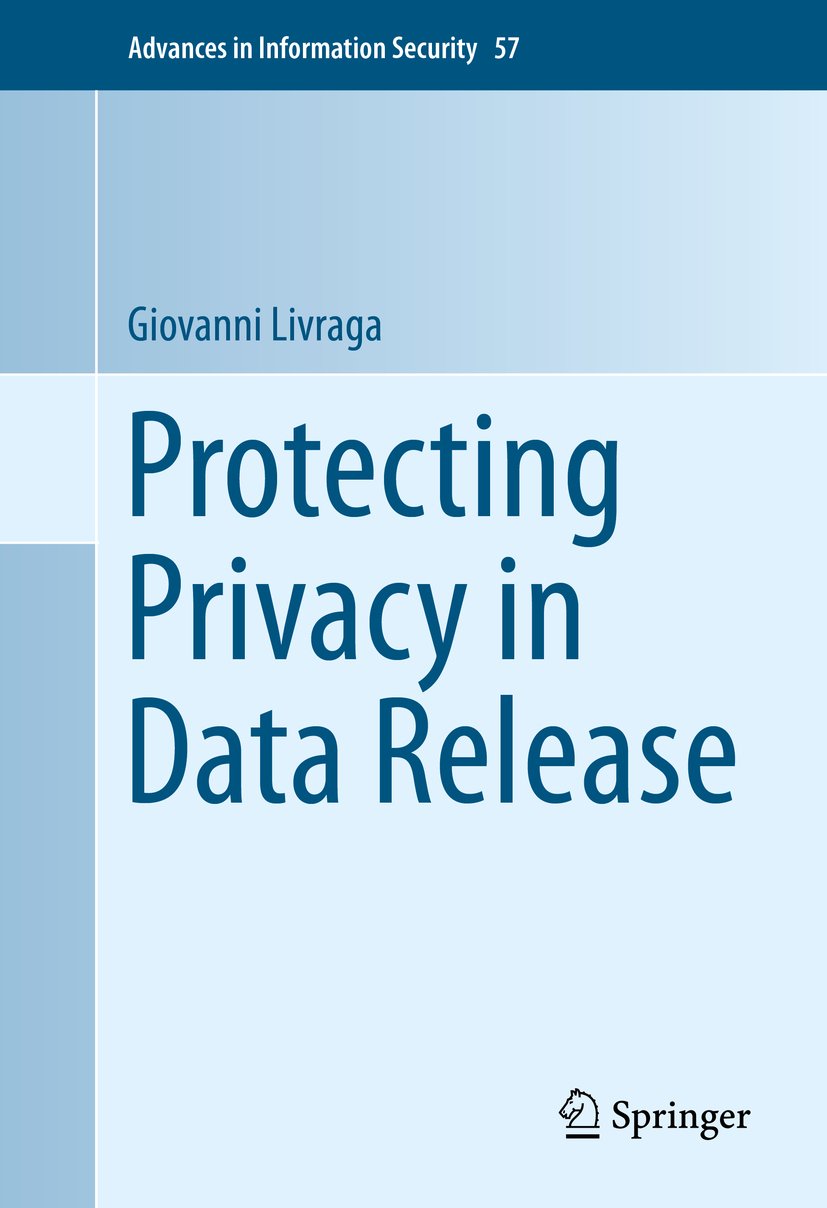
This book presents a comprehensive approach to protecting sensitive information when large data collections are released by their owners. It addresses three key requirements of data privacy: the protection of data explicitly released, the protection of information not explicitly released but potentially vulnerable due to a release of other data, and the enforcement of owner-defined access restrictions to the released data. It is also the first book with a complete examination of how to enforce dynamic read and write access authorizations on released data, applicable to the emerging data outsourcing and cloud computing situations. Private companies, public organizations and final users are releasing, sharing, and disseminating their data to take reciprocal advantage of the great benefits of making their data available to others. This book weighs these benefits against the potential privacy risks. A detailed analysis of recent techniques for privacy protection in data release and case studies illustrate crucial scenarios. Protecting Privacy in Data Release targets researchers, professionals and government employees working in security and privacy. Advanced-level students in computer science and electrical engineering will also find this book useful as a secondary text or reference.

Software Security Engineering draws extensively on the systematic approach developed for the Build Security In (BSI) Web site. Sponsored by the Department of Homeland Security Software Assurance Program, the BSI site offers a host of tools, guidelines, rules, principles, and other resources to help project managers address security issues in every phase of the software development life cycle (SDLC). The book’s expert authors, themselves frequent contributors to the BSI site, represent two well-known resources in the security world: the CERT Program at the Software Engineering Institute (SEI) and Cigital, Inc., a consulting firm specializing in software security. This book will help you understand why Software security is about more than just eliminating vulnerabilities and conducting penetration tests Software security is about more than just eliminating vulnerabilities and conducting penetration tests Network security mechanisms and IT infrastructure security services do not sufficiently protect application software from security risks Network security mechanisms and IT infrastructure security services do not sufficiently protect application software from security risks Software security initiatives should follow a risk-management approach to identify priorities and to define what is “good enough”–understanding that software security risks will change throughout the SDLC Software security initiatives should follow a risk-management approach to identify priorities and to define what is “good enough”–understanding that software security risks will change throughout the SDLC Project managers and software engineers need to learn to think like an attacker in order to address the range of functions that software should not do, and how software can better resist, tolerate, and recover when under attack Project managers and software engineers need to learn to think like an attacker in order to address the range of functions that software should not do, and how software can better resist, tolerate, and recover when under attack
Quickly improve your privacy and security while using Windows 10.
Millions of users have chosen Windows 10 as their operating system for personal and corporate use. Because of the Million users actively using Windows 10, Hackers continuously choose to attack this operating system. This is why you need to ensure you stay protected.
This book is a step-by-step guide specifically designed to show new and advanced users on how to modify and set Windows 10 permission and settings for everyday use. This guide provides steps and pictures to help keep you on track.
•Know the difference between a Standard and Administrator account.
•Keep hackers from spying on you with your built-in webcam.
•Use encryption to protect your information from theft.
•Safely use Microsoft Edge to prevent malware.
•Create a Backup and Restore process for any disaster recovery situation.
These are just a few of the talking points that will be addressed in this book. Don’t be the person who gets a security system after they have already been broken into. Get ahead, with your privacy and security while using Windows 10!
The Hands-On, Practical Guide to Preventing Ajax-Related Security Vulnerabilities  More and more Web sites are being rewritten as Ajax applications; even traditional desktop software is rapidly moving to the Web via Ajax. But, all too often, this transition is being made with reckless disregard for security. If Ajax applications aren’t designed and coded properly, they can be susceptible to far more dangerous security vulnerabilities than conventional Web or desktop software. Ajax developers desperately need guidance on securing their applications: knowledge that’s been virtually impossible to find, until now.            Ajax Security systematically debunks today’s most dangerous myths about Ajax security, illustrating key points with detailed case studies of actual exploited Ajax vulnerabilities, ranging from MySpace’s Samy worm to MacWorld’s conference code validator. Even more important, it delivers specific, up-to-the-minute recommendations for securing Ajax applications in each major Web programming language and environment, including .NET, Java, PHP, and even Ruby on Rails. You’ll learn how to: ·       Mitigate unique risks associated with Ajax, including overly granular Web services, application control flow tampering, and manipulation of program logic·       Write new Ajax code more safely—and identify and fix flaws in existing code ·       Prevent emerging Ajax-specific attacks, including JavaScript hijacking and persistent storage theft·       Avoid attacks based on XSS and SQL Injection—including a dangerous SQL Injection variant that can extract an entire backend database with just two requests·       Leverage security built into Ajax frameworks like Prototype, Dojo, and ASP.NET AJAX Extensions—and recognize what you still must implement on your own·       Create more secure “mashup” applications Ajax Security will be an indispensable resource for developers coding or maintaining Ajax applications; architects and development managers planning or designing new Ajax software, and all software security professionals, from QA specialists to penetration testers.
- Ultra High Definition 6K 12MP (4096×3072) SIX TIMES the resolution of 1080P! 32 Channel H.265+ 12MP NVR Security Camera System with (16) 6K 12MP Weatherproof 3.6mm Wide Angle H.265+ PoE IP Bullet Cameras (Built-in Microphone and Speaker for Two-Way Audio)
- Face Recognition / Human / Vehicle / License Plate Smart AI Detection – Our AI Camera’s built-in intelligent facial recognition and Human/Vehicle/License Plate detection software automatically recognizes familiar faces or people or car or License Plate to maximize security and eliminate false alarms. You’ll instantly know if unknown faces or persons or vehicle arrives on your property with advanced AI motion detection technology
- 12MP @15FPS, 4K @30 FPS Recording Rate – Get clear, smooth real-time video recording at 30 frames per second (FPS). With a higher FPS, the camera can capture more of the action without missing a beat. Avoid choppy real time videos of old security cameras, and get up to speed with 30fps.
- View and Record in Widescreen with Remote Viewing on Computer, Phone and Tablet devices. Plug&Play setting up is so easy! Simply connect the ip Cameras to NVR and download the smartphone App and scan the NVR QR code, you are ready to being live viewing and recording.
- Power over Ethernet setup is clean and simple with a single network cable, built-P2P service. 100% True Plug-and-Play – An additional built-in network interface provides a unique IP address to each security camera, eliminating the hassle of messy IP security camera configurations.
- Work with Alexa and Google (Add voice control with Alexa or Google Assistant device). Includes 10+ Smart AI Detection & Snapshot & Email Alerts & USB backup feature for peace of mind. Pre-installed 8TB Hard Drive. (4 SATA, Up to 12TB each, Total up to 48TB). Our products are NDAA Compliance and we provide Two Years Warranty and Free Lifetime Tech Support
- PKI FIDO2 SECURITY KEY: This USB-A security key combines X509 digital certificates (PKI) and FIDO for maximum protection. Supports digital signatures, file encryption, and phishing-resistant authentication based on FIDO or PKI. FIDO 2.0 level 1 and U2F certified
- PASSWORDLESS CONVENIENCE: Replace frustrating passwords with a simple 4-digit PIN for accessing apps and sites. Seamlessly login to web apps and Windows sessions
- BROAD COMPATIBILITY: Works with Windows, Linux and USB-A devices. Seamlessly integrates with Identity Providers or Credential Management Systems supporting FIDO2, ensuring secure use across various platforms, including Thales, Microsoft, AWS, and Google
- ENHANCED USER ADOPTION: Features a sensitive presence detector on the USB key, providing ease of use and superior security. Certified for U2F and FIDO2, ideal for individuals who want to secure access to their personal online accounts – Microsoft, Google, Twitter, Facebook, GitHub
- THALES: We offer a wide range of FIDO authenticators, providing robust, phishing-resistant MFA that comply with stringent regulations. With almost three decades of experience, Thales is a pioneer in passwordless authentication devices, supported globally by the FIDO Alliance and industry analysts
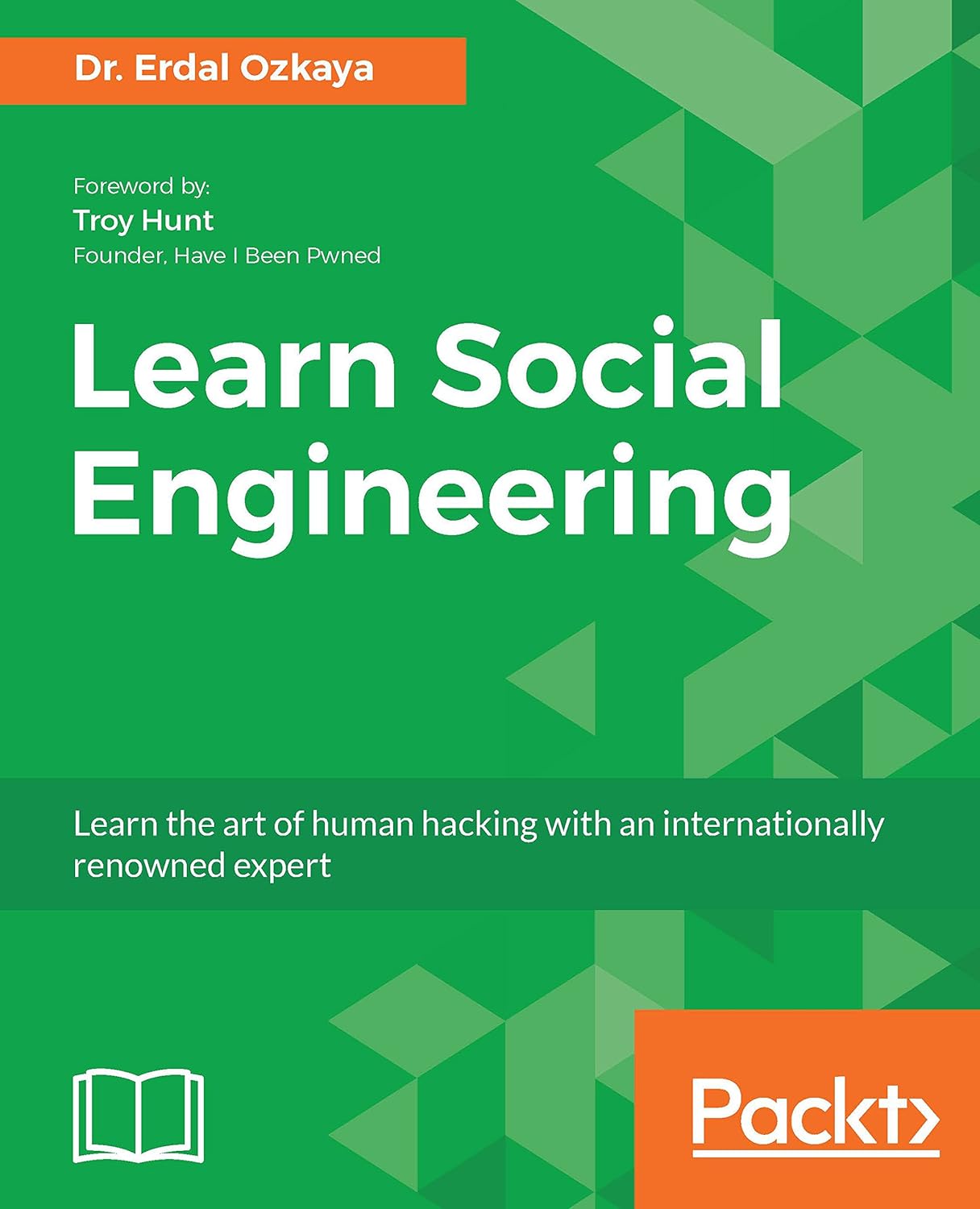
Improve information security by learning Social Engineering.Key FeaturesLearn to implement information security using social engineeringLearn to implement information security using social engineeringGet hands-on experience of using different tools such as Kali Linux, the Social Engineering toolkit and so onGet hands-on experience of using different tools such as Kali Linux, the Social Engineering toolkit and so onPractical approach towards learning social engineering, for IT securityPractical approach towards learning social engineering, for IT securityBook DescriptionThis book will provide you with a holistic understanding of social engineering. It will help you to avoid and combat social engineering attacks by giving you a detailed insight into how a social engineer operates.Learn Social Engineering starts by giving you a grounding in the different types of social engineering attacks,and the damages they cause. It then sets up the lab environment to use different toolS and then perform social engineering steps such as information gathering. The book covers topics from baiting, phishing, and spear phishing, to pretexting and scareware.By the end of the book, you will be in a position to protect yourself andyour systems from social engineering threats and attacks.All in all, the book covers social engineering from A to Z , along with excerpts from many world wide known security experts.What you will learnLearn to implement information security using social engineeringLearn to implement information security using social engineeringLearn social engineering for IT securityLearn social engineering for IT securityUnderstand the role of social media in social engineeringUnderstand the role of social media in social engineeringGet acquainted with Practical Human hacking skillsGet acquainted with Practical Human hacking skillsLearn to think like a social engineerLearn to think like a social engineerLearn to beat a social engineerLearn to beat a social engineerWho this book is forThis book targets security professionals, security analysts, penetration testers, or any stakeholder working with information security who wants to learn how to use social engineering techniques. Prior knowledge of Kali Linux is an added advantageTable of ContentsIntroduction to social engineeringIntroduction to social engineeringThe psychology of social engineering (mind tricks used)The psychology of social engineering (mind tricks used)Fundamentals of influence and persuasionFundamentals of influence and persuasion Information gathering Information gatheringTargetting and ReconTargetting and ReconElicitationElicitationPretextingPretextingThe tools used in social engineeringThe tools used in social engineeringPrevention and mitigationPrevention and mitigationCase studies of social engineeringCase studies of social engineeringAsk the Experts- Part 1Ask the Experts- Part 1Ask the Experts – Part 2Ask the Experts – Part 2Ask the Experts – Part 3Ask the Experts – Part 3Ask the Experts- Part 4Ask the Experts- Part 4
How to get cashback?
we approve your purchase
request button